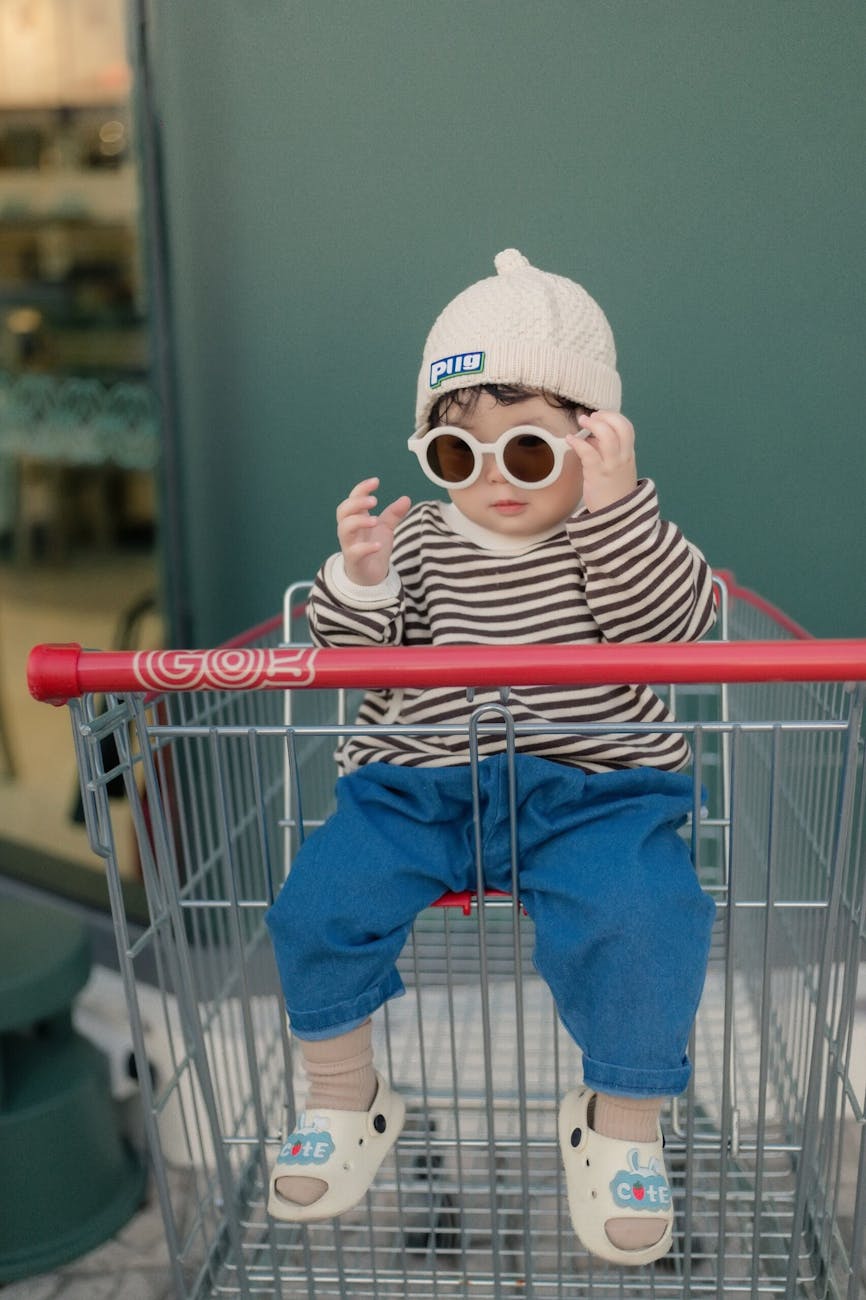
I really enjoy going grocery shopping with my child, and I think he enjoys it too. For him, it’s not just about shopping—it’s about watching people, exploring new things, and taking in the busy atmosphere of the store. Because he enjoys it so much, I’ve noticed that he often doesn’t want to leave when it’s time to go home.
Understanding Behavior as Communication
At his age, he is still learning how to communicate and express his emotions. Sometimes, instead of using words, he uses his behavior (e.g., throwing himself to the ground) to let me know what he wants. Based on my professional experience in the field, I believe he is telling me: “I don’t want to go home yet. I want to stay and explore the store longer.”
While I don’t worry too much about how others look at us when he has a meltdown—whether it’s at the store entrance, in the parking lot (in a safe spot), or even in the aisles—I still want to help him learn the routines and expectations
Why Social Stories Help
That’s why I use Gemini to create stories to support him. Social stories can provide clear, visual, and concrete explanations of social situations, helping children prepare for transitions and develop strategies to manage their emotions. I hope the stories I create with Gemini give him clear, visual examples of what happens when it’s time to leave the store.
My Experience with Gemini
In terms of how I use Gemini, I start by describing what I want and what typically happens with my child. But it often requires a lot of prompting and revising the storybook content. Sometimes the visuals are inaccurate, and I have to redo them. For example, once the “car seat” appeared somewhere other than on the actual seat, and no matter how I adjusted my prompts, Gemini just wouldn’t correct it. Some content is also difficult to adjust, even when I give very specific prompts. I think the number of prompts I used may have pushed the system’s limits.
Another issue I noticed is related to stereotypes in the generated images. At first, Gemini gave me all white characters. After I prompted that I am Asian, it generated characters with exaggerated, stereotypical features. These limitations remind me that AI still has a long way to go in ensuring cultural sensitivity and accurate representation.
Reflections
Despite these challenges, this version of the story is probably the closest to what I need. Of course, some of the pictures or content still need adjustments, but it is a good start. For me, this experiment is about exploring how AI can support parenting—and possibly, with the right prompts, provide helpful tools.
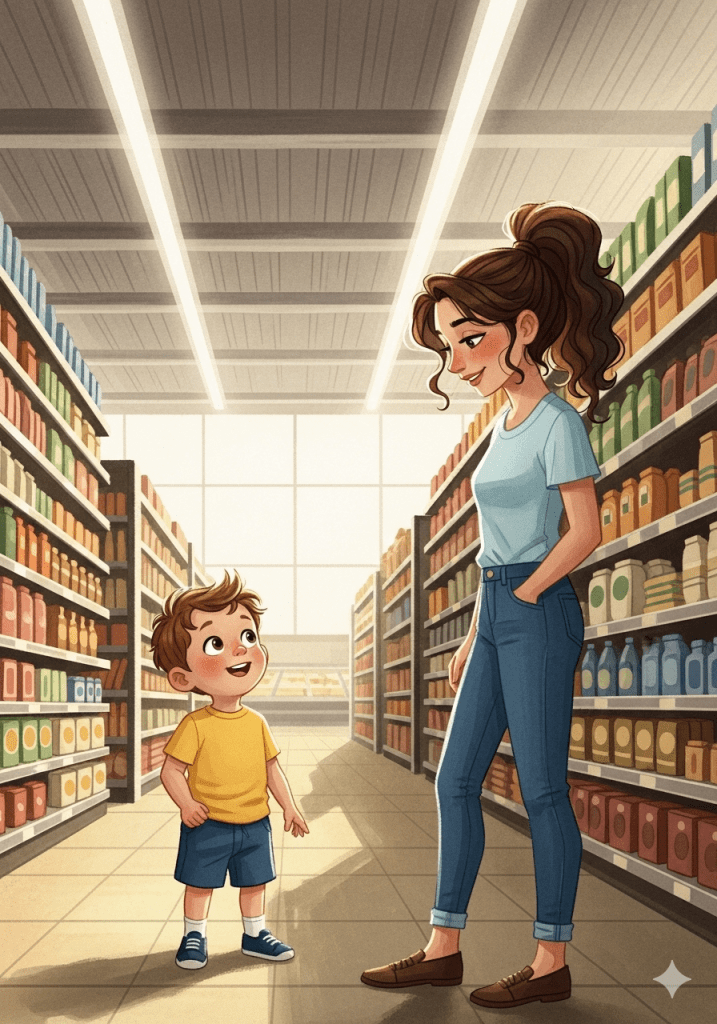
In the end, what matters most is that these stories give my child the tools to understand his world, navigate his feelings —even in everyday places like the grocery store.
If you are interested in seeing how this looks, you can find the story here. Since we are a bilingual family, I created two version, English and Mandarin.
English Version: https://g.co/gemini/share/72e6a7e2d0cd
Traditional Chinese Version: https://g.co/gemini/share/e1854c7b5b74
 Hsiu-Wen Yang